??轉(zhuǎn)型與探索:第30屆歐洲鄉(xiāng)村社會(huì)學(xué)大會(huì)觀察與紀(jì)要
馬惠娣(2025年8月2日)
每?jī)赡暌粚玫臍W洲鄉(xiāng)村社會(huì)學(xué)大會(huì)于7月7-11日在拉脫維亞首都里加舉行���,這是第30屆會(huì)議�,至今持續(xù)六十年���。其基本理念:“去增長(zhǎng)、少消費(fèi)�、更自然”。
本次會(huì)議由Rīga Stradi?? University承辦���,多國(guó)學(xué)者組成大會(huì)科學(xué)委員會(huì)��。主題是:“引領(lǐng)鄉(xiāng)村轉(zhuǎn)型:探索宜居未來(lái)”(Navigating rural transitions: Exploring liveable futures)���,吸引四百余人出席大會(huì)�,包括專業(yè)性的和跨學(xué)科的�。大會(huì)邀請(qǐng)了三位著名學(xué)者做了大會(huì)報(bào)告,對(duì)氣候變化與不確定性未來(lái)的鄉(xiāng)村轉(zhuǎn)型做了深刻分析和具有遠(yuǎn)見卓識(shí)的預(yù)警����,以及對(duì)學(xué)者社會(huì)責(zé)任的期待。
大會(huì)開幕式的前奏(社交)在前一天晚上的里加古城有著一千余年歷史的DOME修道院舉行���,新朋舊友在此相聚����。當(dāng)?shù)亟M委會(huì)以拉脫維亞人傳統(tǒng)的待客形式——伴著悠揚(yáng)的手風(fēng)琴樂曲和穿著民族服飾的年輕女子����,翩翩起舞。熱情地邀客人們共舞�。因?yàn)楫?dāng)時(shí)下著雨,這些活動(dòng)不得不由修道院中心草坪改為在廊道內(nèi)。但并未影響整個(gè)活動(dòng)呈現(xiàn)的簡(jiǎn)潔而熱烈���、浪漫與輕松��、自然又友好的氣氛�����。
大會(huì)的基本理念:在當(dāng)今世界充滿挑戰(zhàn)的背景下��,引領(lǐng)鄉(xiāng)村轉(zhuǎn)型�����,探索宜居鄉(xiāng)村的未來(lái),正面臨一系列多元化的挑戰(zhàn)��,同時(shí)也具有可能性——實(shí)現(xiàn)所有人共享的公正�����、可持續(xù)且“值得生活”的未來(lái)�;勉強(qiáng)維持生計(jì)甚至災(zāi)難性的未來(lái);介于兩者之間的所有情境的未來(lái)�����。這些未來(lái)的可能性,需要學(xué)者們參與批判性的社會(huì)政治與社會(huì)生態(tài)議題討論����,當(dāng)然,也不僅僅限于此��。
同樣有些議題十分重要����,諸如:農(nóng)業(yè)與糧食系統(tǒng),正義與歧視����,知識(shí)政治,社會(huì)動(dòng)員與能動(dòng)性�,移民與流動(dòng)性,技術(shù)���、聯(lián)結(jié)與團(tuán)結(jié)�����,關(guān)懷與希望��。此外���,還需關(guān)注(地方)民主���、集體行動(dòng)的重要性,以及在鄉(xiāng)村地區(qū)發(fā)展相對(duì)自主的組織形式(如鄉(xiāng)村公共資源)���。
探討這些議題意味著既要關(guān)注當(dāng)下人們的實(shí)際生活經(jīng)驗(yàn)與實(shí)踐����,也要考量人們的愿景與期待�。這要求我們運(yùn)用、質(zhì)疑并發(fā)展新的理論與方法�,同時(shí)就研究者的角色及所需采取的行動(dòng)展開討論。
在持續(xù)的不確定性及多重交織的“危機(jī)”中��,如何確保宜居鄉(xiāng)村的未來(lái)���,尤其關(guān)注那些能被剖析并參與實(shí)現(xiàn)宜居鄉(xiāng)村未來(lái)過(guò)程中不同動(dòng)態(tài)、實(shí)踐��、張力����、矛盾與復(fù)雜關(guān)聯(lián)的問題尤為重要��。
圍繞“引領(lǐng)鄉(xiāng)村轉(zhuǎn)型:探索宜居未來(lái)”這一主題��,大會(huì)設(shè)有三十九個(gè)分議題:
1���、基于價(jià)值的替代性食物體系:認(rèn)證之外的質(zhì)量保障與可持續(xù)實(shí)踐
2、土地改革與社區(qū)共有土地:構(gòu)建宜居未來(lái)的路徑
3��、代際更迭�����、可持續(xù)農(nóng)業(yè)與鄉(xiāng)村未來(lái)
4����、農(nóng)業(yè)中生活與工作的交集:探索如何創(chuàng)造宜居的"當(dāng)下"與未來(lái)
5、游戲化鄉(xiāng)村宜居未來(lái):研究與教育中的游戲設(shè)計(jì)
6���、鄉(xiāng)村能否成為新的創(chuàng)意中心����?基于地域的文化創(chuàng)新與變革力量
7����、鄉(xiāng)村驗(yàn)證:是多元意義的否定還是地方化政策制定的希望工具�����?
8��、從糧食之鄉(xiāng)到碳匯之地——農(nóng)業(yè)生計(jì)與氣候解決方案市場(chǎng)的張力
9��、鄉(xiāng)村紳士化的多元形態(tài)
10����、我們?yōu)楹谓淌卩l(xiāng)村社會(huì)學(xué)���?其目的何在�?
11�、轉(zhuǎn)型期鄉(xiāng)村地域中森林與林業(yè)的角色
12、轉(zhuǎn)型期鄉(xiāng)村空間的社會(huì)參與和行動(dòng)主義
13��、鄉(xiāng)村社區(qū)重?zé)?lián)結(jié)活力的路徑
14��、構(gòu)建依賴水資源的轉(zhuǎn)型期鄉(xiāng)村社區(qū)的宜居未來(lái)
15���、鄉(xiāng)村地區(qū)食物自給與技能:家庭與社區(qū)層面的韌性啟示
16��、研究鄉(xiāng)村地區(qū)社會(huì)-生態(tài)轉(zhuǎn)型的社會(huì)維度
17�����、“獨(dú)辟蹊徑”(Queering)視角下的農(nóng)業(yè)與鄉(xiāng)村性
18��、回到未來(lái)���?鄉(xiāng)村生物經(jīng)濟(jì)與農(nóng)業(yè)食品未來(lái)
19、重構(gòu)南歐鄉(xiāng)村空間轉(zhuǎn)型:生計(jì)機(jī)遇與日常生活
20�����、生物區(qū)域戰(zhàn)略:尋求社會(huì)�����、經(jīng)濟(jì)與環(huán)境未來(lái)平衡的宜居鄉(xiāng)村
21�、知識(shí)經(jīng)濟(jì)與文化十字路口:移民與歐洲鄉(xiāng)村的轉(zhuǎn)型
22、數(shù)字基礎(chǔ)設(shè)施能否鋪就農(nóng)業(yè)宜居未來(lái)���?
23����、農(nóng)業(yè)領(lǐng)土化前沿:經(jīng)濟(jì)可行性、社會(huì)生態(tài)可持續(xù)性與食物系統(tǒng)未來(lái)
24�����、量化環(huán)境:社會(huì)與自然關(guān)系的重塑
25����、性別平等與農(nóng)業(yè)及鄉(xiāng)村未來(lái)的宜居性
26、鄉(xiāng)村住房危機(jī)還是危機(jī)中的鄉(xiāng)村住房��?國(guó)際視野下的當(dāng)前挑戰(zhàn)
27�����、島嶼的本位研究:發(fā)展宜居島未來(lái)的研究方法
28�、技術(shù)與數(shù)字化的鄉(xiāng)村未來(lái)
29、構(gòu)建宜居鄉(xiāng)村未來(lái):社會(huì)氣候正義視角下的社會(huì)團(tuán)結(jié)經(jīng)濟(jì)
30����、融合公共領(lǐng)域與政策制定:運(yùn)用社會(huì)學(xué)知識(shí)創(chuàng)造宜居未來(lái)?
31�����、動(dòng)蕩的當(dāng)下與不確定未來(lái):如何探索并駕馭農(nóng)業(yè)食品系統(tǒng)與鄉(xiāng)村轉(zhuǎn)型
32、鄉(xiāng)村語(yǔ)境下包容性研究實(shí)踐的反思
33�、地域?qū)用嫔鷳B(tài)農(nóng)業(yè)轉(zhuǎn)型:方向、僵局與迂回之路
34��、農(nóng)場(chǎng)轉(zhuǎn)型:多樣化���、綠色化及其他社會(huì)經(jīng)濟(jì)可持續(xù)路徑
35、鄉(xiāng)村轉(zhuǎn)型的政治維度:探索城鄉(xiāng)分化的政治化及其對(duì)歐洲社會(huì)影響
36�����、壓力下的藝術(shù)與文化:如何面對(duì)鄉(xiāng)村宜居未來(lái)的角色���?
37�����、后疫情時(shí)代的鄉(xiāng)村人口變化與挑戰(zhàn):復(fù)興�、韌性還是倒退�����?
38�、作為創(chuàng)新生態(tài)系統(tǒng)的鄉(xiāng)村地區(qū):變革性戰(zhàn)略與社會(huì)創(chuàng)新
39、鄉(xiāng)村老齡化:老年鄉(xiāng)村生活的挑戰(zhàn)與機(jī)遇
這些議題意味深遠(yuǎn):關(guān)注現(xiàn)實(shí):既要看到當(dāng)下人的生活實(shí)踐��,也要傾聽他們對(duì)未來(lái)的渴望;理論創(chuàng)新:需要理論的批判性����,既要檢驗(yàn)已有的范式,也要探索鄉(xiāng)村復(fù)雜性的新方法論����;之于學(xué)者的責(zé)任:需重新界定研究者角色,厘清學(xué)術(shù)介入與社會(huì)行動(dòng)邊界的相互關(guān)系����。這些議題與鄉(xiāng)村經(jīng)驗(yàn)對(duì)非歐洲國(guó)家?guī)?lái)重要的啟示。
會(huì)議舉辦包括多種形式�����,諸如:學(xué)術(shù)報(bào)告�、圓桌討論、音視頻材料���、現(xiàn)場(chǎng)表演(音樂���、戲劇、詩(shī)歌)、攝影或藝術(shù)展覽��、圖書發(fā)布等環(huán)節(jié)��。
會(huì)議期間����,大會(huì)還組織了不同線路的城鄉(xiāng)考察項(xiàng)目�����。筆者參加了里加世界文化遺產(chǎn)之一“中央市場(chǎng)”���。這是德國(guó)侵占拉脫維亞戰(zhàn)敗后��,政府利用當(dāng)年制造武器的五個(gè)高大建筑����,變?yōu)樽尦鞘谐錆M“接地氣”�、“煙火氣”的城市生活聚集地,如今已百年有余����。這里不僅與拉脫維亞人日常生活息息相關(guān),也帶動(dòng)了城鄉(xiāng)一體化的發(fā)展,并輻射到周邊國(guó)家��。既有充滿人文關(guān)懷的生活情趣�,也帶動(dòng)城鄉(xiāng)經(jīng)濟(jì)發(fā)展和就業(yè)。
據(jù)大會(huì)的統(tǒng)計(jì)��,參加歐洲鄉(xiāng)村社會(huì)學(xué)協(xié)會(huì)的會(huì)員數(shù)量���,第一位是英國(guó)���、第二位是德國(guó)、第三位是荷蘭��。這一統(tǒng)計(jì)數(shù)據(jù)耐人尋味����。
其中會(huì)議分議題:“鄉(xiāng)村地區(qū)食物自給與技能:家庭與社區(qū)層面的韌性啟示”一組的投稿人和聽會(huì)人格外多,討論也很熱烈�����。一方面表達(dá)了對(duì)“去增長(zhǎng)�、少消費(fèi)、更自然”價(jià)值理念的追求����;另一方面也看到歐洲人面對(duì)不確定性所做出前瞻性的預(yù)警�。
大會(huì)還選舉了新的一屆理事會(huì)����,報(bào)告了過(guò)去兩年協(xié)會(huì)的會(huì)員增長(zhǎng)、財(cái)務(wù)收支等情況�。
筆者,參加了兩個(gè)組別的討論�����,分別提交了:Home Gardening: Resilience, Dilemmas, and the Promise of Alternative Food Systems的論文���;另一篇關(guān)注了:Nurturing a Sound Personality and Rural Vitality in Ecological Games (Education)(附摘要于后)
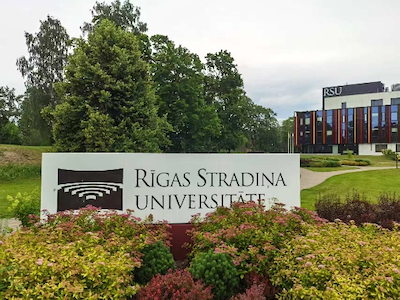
(Rīga Stradi?? University座落于綠色植被和大樹的環(huán)境之中)
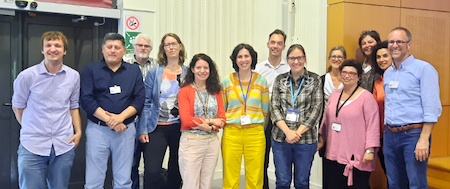
The newly elected Executive Board of the European Association of Rural Sociologists. Mi?elis Grīvi?? - first from left
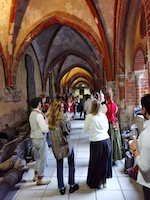 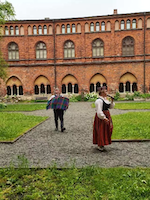 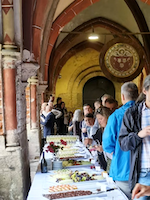
(修道院社交畫面)
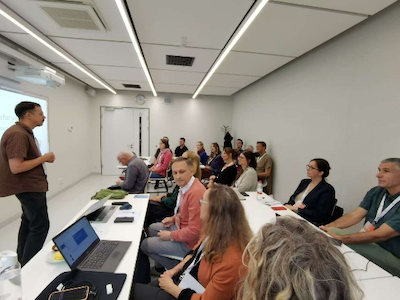
(專題討論組現(xiàn)場(chǎng))
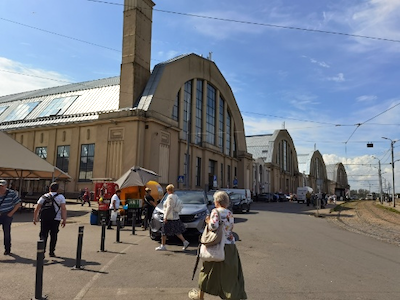
(中央市場(chǎng)外景)
 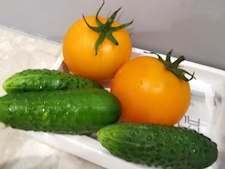
(中央市場(chǎng)的蔬果味道純正。據(jù)悉政府有嚴(yán)格的食品源頭監(jiān)察體系��,確保食物的品質(zhì)��。)
(ESRS2025大會(huì)官方LOGO)
附摘要(1)
"Being Flatted", the Phenomenon Among Chinese Farmers, its Potential Risks and Lessons
——The urgency to regain values of food-self provisioning
Huidi Ma Fangliang Wang
Abstract
The phenomenon of "Being Flatted" refers to Chinese farmers’ land being taken for reclamation and urban development (Ministry of Land and Resources, 2008), forcing them to move out of their ancestral estates into high-rise buildings. Its consequences: the local governments’ expropriation of arable lands for property development has left villagers unable to grow food in the fields or yards, and their cost-of-living increase (Chen Xiwen, 2011). In allusion to this phenomenon, the article focuses on the working and living conditions of approximately 200 million rural residents who have gone into town over the past decade. By examining the status quo of their allotments, urban living costs, food sources, and food reserves, we uncover the longstanding trend of rural hollowing. It would be like hidden potential risks: there’s no one to hand over the farming skills, and old wisdoms are irretrievably lost. Meanwhile, the spirits of law, fairness and justice are being challenged; a new underprivileged class emerge; and social conflicts rise. Our conclusion: the inconsistent rural policies have left villagers with broken hopes; They “enter with city optimism but leave in despair”. The loss of allotment means heavier burden in domestic life, the decline of folk agricultural techniques, and lower resilience to food shortages. These add to the uncertainty of outlook, striking a deathblow to families or even the entire country. For now, the top priority should be to turn our vision from the commercial system to the value of food-self provisioning in rural life.
Key Words: "Being Flatted”, loss of allotment, rural hollowing, potential risks, lessons
附摘要(2)
Nurturing a Sound Personality and Rural Vitality in Ecological Games (Education)
Huidi Ma
Abstract:The natural attributes of rural endow ecological education in serious games with endless imagination and creativity. Currently, various projects in China focused on youth natural education (such as planting, animals, plants, microorganisms, geography, phenology, etc.) are flourishing. Across different regions, a diverse range of "natural value" (Holmes Rolston) curricula have emerged, enabling youth to explore the interconnectedness of human, nature, the earth and others through activities that foster both sound personality development and rural vitality.
This paper uses the NGO of "Friends of Nature" as a case study to investigate the motivations, preferences, and interests cultivated in the participants of those serious games. It examines the roles they play in " state of being " and " socialization" (John R. Kelly), as well as their attitudes towards social care. The study aims to construct a "Serious Games Model " to analyze the complex dynamic relationships among human, natural ecology and social ecology. It tracks and assesses the correlation, effectiveness, and limitations of interrelated transformations, and predicts and the potential of serious games to counteract the encroachment of AI technology on human nature. Additionally, it explores social practices rooted in the cultural heritage of rural ecology.
The research concludes that serious games contribute to enhancing the vitality and livability of rural environments, promoting urban-rural integration. Against the background of today's deeply technologized human life, boldly innovating serious games in rural areas can both repair human nature and cultivate "technological virtues" (Shannon Vallor). In summary, humans bear responsibilities to uphold the natural attributes of both rural environments and themselves.
【Keywords】Rural vitality , Ecological education, Sound personality, Technological virtues
|